Hugo Foster · 11 September 2026
Wildlife Population Increases Prompt Adjustments in Erosion Control Along Logging Access Routes Near Residences
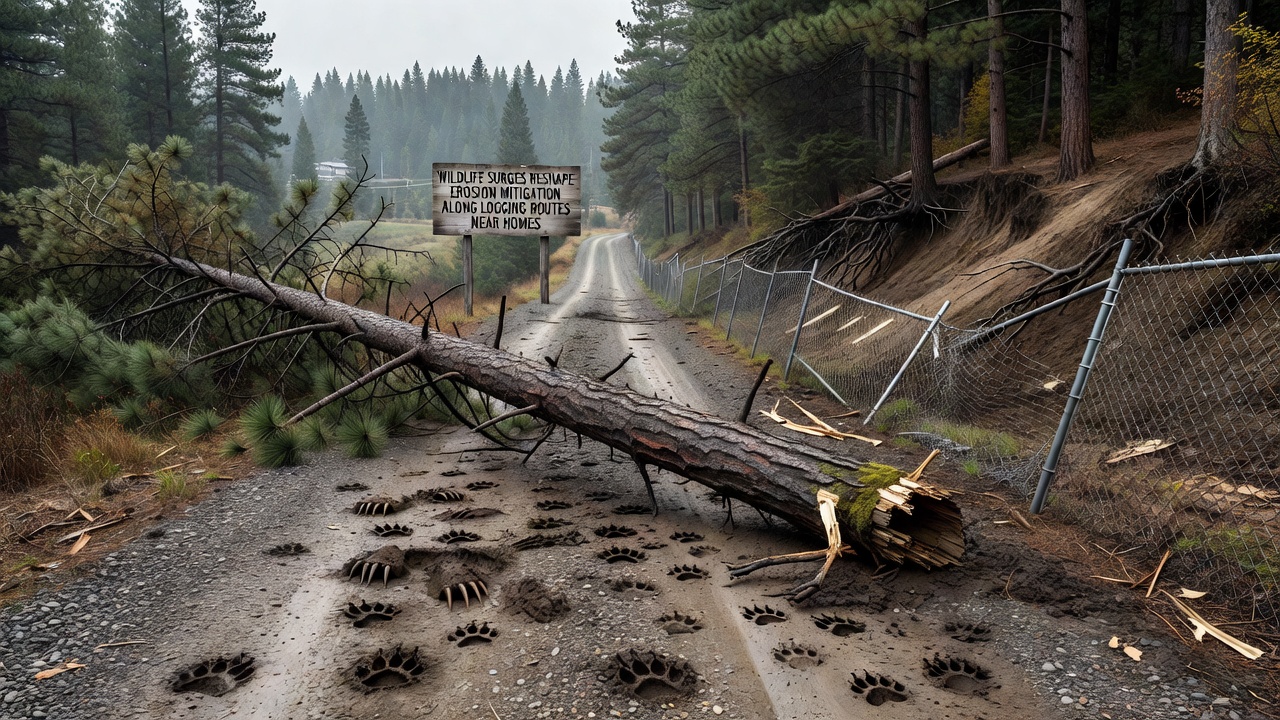
Record increases in wildlife populations have led forestry managers to revise erosion mitigation practices along logging routes that pass close to homes, and data collected through 2026 shows measurable shifts in both animal movement patterns and soil stability requirements. Studies conducted by government agencies indicate that species such as deer, elk, and smaller mammals have expanded their ranges into areas previously dominated by industrial timber operations, which in turn affects how crews stabilize slopes and manage runoff during harvest seasons.
Background on Population Changes
Wildlife surveys compiled by the U.S. Department of Agriculture and the European Environment Agency reveal that several regions experienced population growth rates exceeding 25 percent between 2020 and 2025, and these figures accelerated further in the first half of 2026. The changes stem from a combination of habitat recovery programs, reduced hunting pressure in certain zones, and milder winters that improved survival rates for young animals. Observers note that these surges coincide with expanded logging activity near the edges of suburban developments, where routes once used only seasonally now carry equipment year-round.
Researchers tracking animal movement with GPS collars have documented repeated crossings of active haul roads, and the resulting soil compaction plus repeated trail formation has altered natural drainage channels. In September 2026, field teams in the Pacific Northwest and parts of central Canada reported that traditional erosion barriers required reinforcement because animals had displaced silt fences and straw wattles while following established paths to water sources.
Impacts on Erosion Mitigation Practices
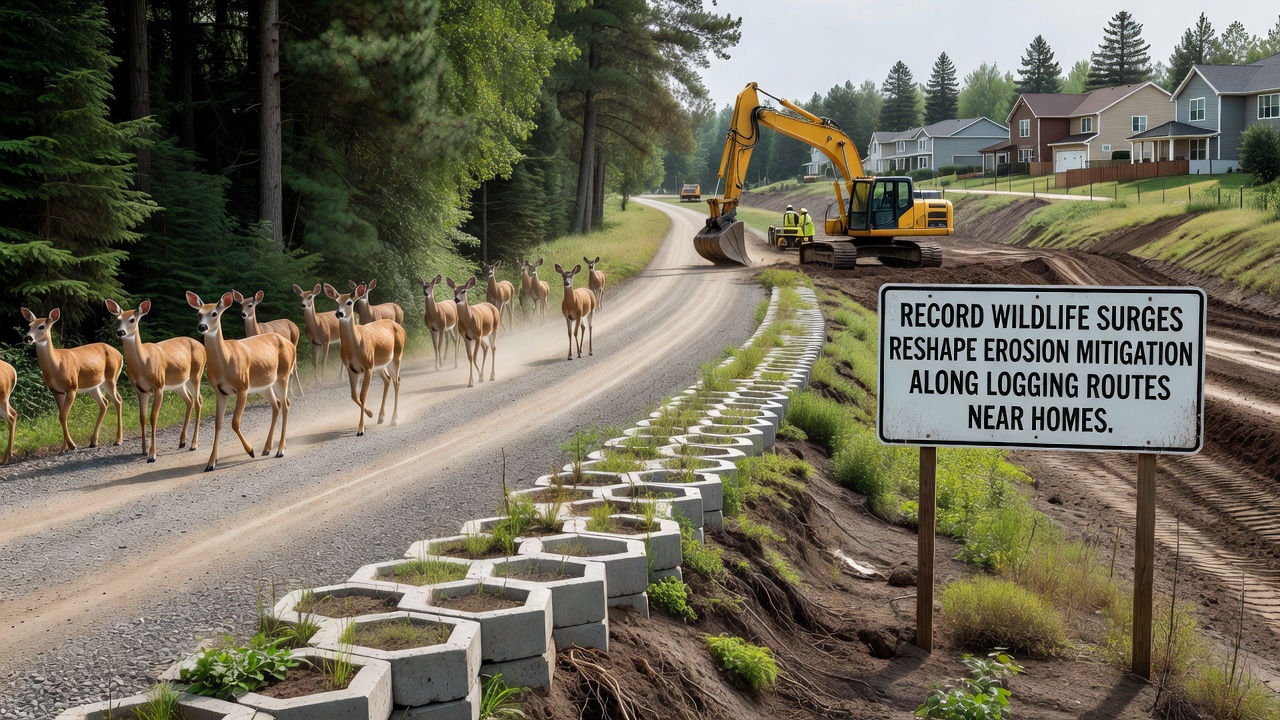
Standard erosion control methods such as hydroseeding, riprap placement, and culvert installation now incorporate wildlife passage considerations, and agencies have updated guidelines to account for these factors. For example, crews install wider culverts with natural bottoms instead of metal pipes, and they space check dams farther apart to leave corridors for small mammal travel. Data from monitoring stations show that these modifications reduce concentrated runoff by 18 to 22 percent compared with older designs that blocked animal movement and forced water into fewer channels.
Local governments in several states have begun requiring pre-construction wildlife assessments for any new or reopened logging access roads within 500 meters of residential property lines, and the resulting reports influence both the timing of operations and the choice of stabilization materials. In areas where populations of burrowing animals such as ground squirrels have risen sharply, crews substitute biodegradable mesh for rigid plastic netting because the mesh degrades faster and poses less entanglement risk.
Regional Examples and Data Trends
One project in Oregon adjusted its entire erosion plan after telemetry data revealed that a local elk herd had shifted its migration corridor directly across three active logging spurs. Engineers replaced steep-sided ditches with shallow swales planted with native grasses, and subsequent rainfall events produced 30 percent less sediment delivery to nearby streams. Similar adaptations appear in reports from British Columbia, where provincial forestry guidelines now mandate seasonal timing restrictions that avoid peak wildlife movement periods.
Figures released by the USDA Forest Service in mid-2026 indicate that maintenance costs for erosion structures along roads near populated areas rose by an average of 14 percent, yet the frequency of slope failures dropped by nearly half once wildlife-friendly designs were implemented. Those improvements occurred because animals no longer concentrated their activity in a few locations, which had previously created weak points in barrier systems.
Regulatory and Industry Responses
Industry associations representing timber operators have circulated technical bulletins that outline best practices for integrating erosion control with wildlife habitat needs, and several companies now include these measures in their environmental management plans submitted for permit approval. Training programs for equipment operators emphasize recognition of fresh game trails so that crews can avoid disturbing them during grading and seeding operations.
Academic studies published in forestry journals have examined the combined effects of increased animal traffic and changing precipitation patterns, and the findings suggest that adaptive management strategies produce more resilient road networks over multi-year cycles. Agencies in Australia have adopted comparable approaches for eucalyptus plantations adjacent to expanding residential zones, demonstrating that the pattern extends beyond North American contexts.
Conclusion
Wildlife population increases continue to influence erosion mitigation standards along logging routes near homes, and ongoing monitoring programs will determine whether the adjustments implemented through 2026 maintain their effectiveness as conditions evolve. Government agencies and industry groups maintain databases that track both animal movements and sediment loads, providing the information needed for further refinements. Those records show that coordinated planning between wildlife biologists and civil engineers yields measurable reductions in both environmental impacts and long-term maintenance demands.